


Current Conditions
At Macon Soccer Club, the safety of our kids is our top priority, especially when it comes to weather conditions. We know that playing outside means respecting nature, so we closely monitor weather forecasts and take proactive measures to ensure every player is safe during practices and games. This commitment not only protects our athletes, but also fosters a culture of care and responsibility within our community, allowing young players to focus on honing their skills and enjoying the beautiful game of soccer.
Heat and WBGT
The WBGT index is the indicator that Georgia Soccer uses to determine safe parameters around game time and practices in severe heat. For more information on this, check their website (https://www.georgiasoccer.org/heat-policy/). It's important to note that the WBGT index changes by the hour and is offset by conditions such as cloud coverage and shade, but here is the policy regarding extreme conditions (note: middle Georgia reaches the highest alert for a short duration on average of 20 days per year):
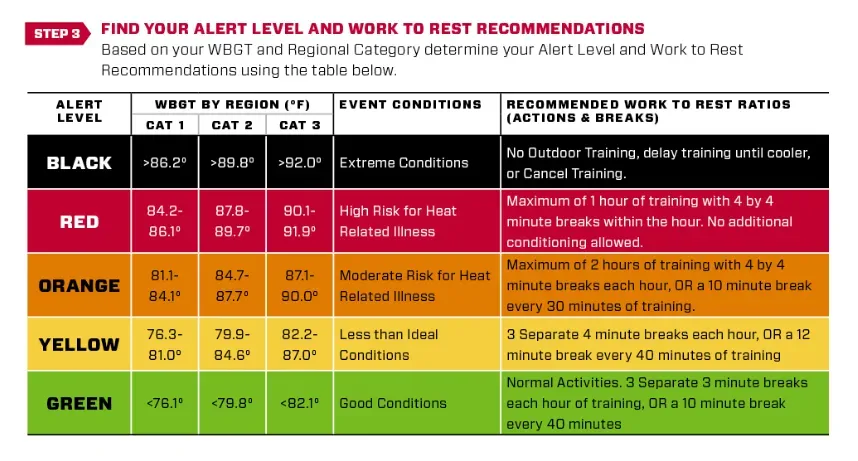
To anticipate future conditions, Convergence of Climate-Health Vulnerabilities has put together a great tool centered around state athletics. You can view it by doing the following:
- Go to the website
- Click Macon on the map (if it isn't already selected)
- Click submit (don't worry about the flag level guidelines)
- Wait 10-15 seconds for the graph to appear (it will show up below the map)
However, while that info is useful for future forecasting and planning, we at MSC use local data found HERE to make determinations for safety regarding practices and games--thanks to the UGA Weather Network that monitors and shares this important information.
We never want to cancel or limit playtime, and we understand that this can be a frustrating event when it's required, but we'll always put the safety of our players, coaches, and fans above all else.
Cold and Wind Chill
While not always as easily noticeable as with heat, extreme cold can negatively impact players, coaches, and spectators, as well. Not only are there direct physiological effects to be concerned about, such as frostbite, but other symptoms of extreme cold, such as impaired judgment, slow reaction time, muscle strain, and reduced endurance, can create a cascade of effects that can result in injury, as well.
For these reasons, US Soccer has created a series of Cold Weather Guidelines that we consult when it gets cold. It is based not only on the temperature, but the Wind Chill Factor (WCF). You can see the charts below as an aid to calculate this number and see the corresponding warning or suggestion.
Even if the WCF is not at dangerous levels, it is important that our players learn how to properly dress for this weather condition. Cold stress is the issue, and, as US soccer puts it, "the definition of 'cold stress' varies across the United States, depending on how accustomed people are to cold weather. A player from Minnesota will have a much different threshold for cold than a player from Georgia."
The layering technique will help your player achieve proper warmth:
- Inner Layer 1: wicking layer (wool or polyester)
- Middle Layer 2: insulated layer (fleece or wool)
- Outer Layer 3: water and wind proof layer
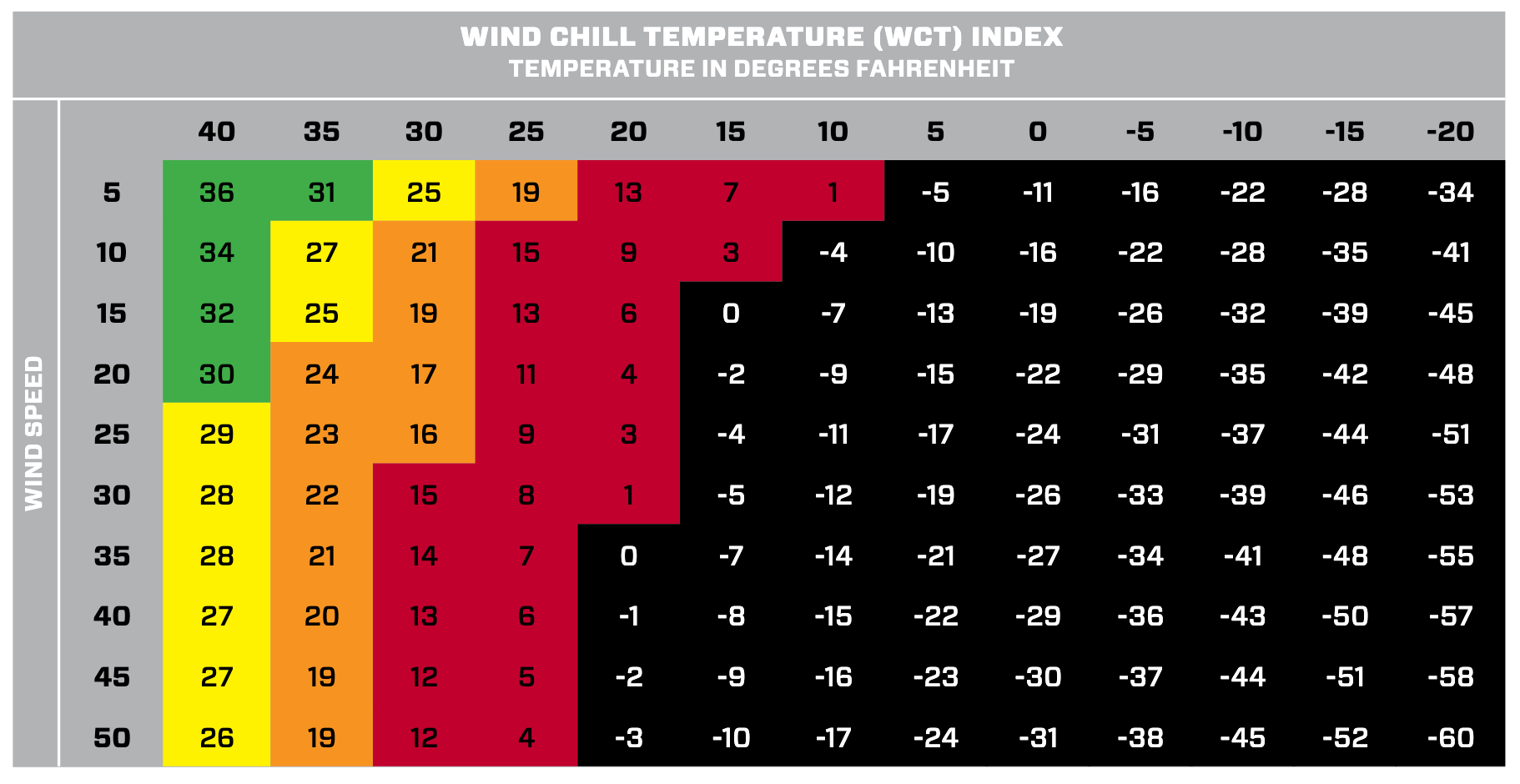
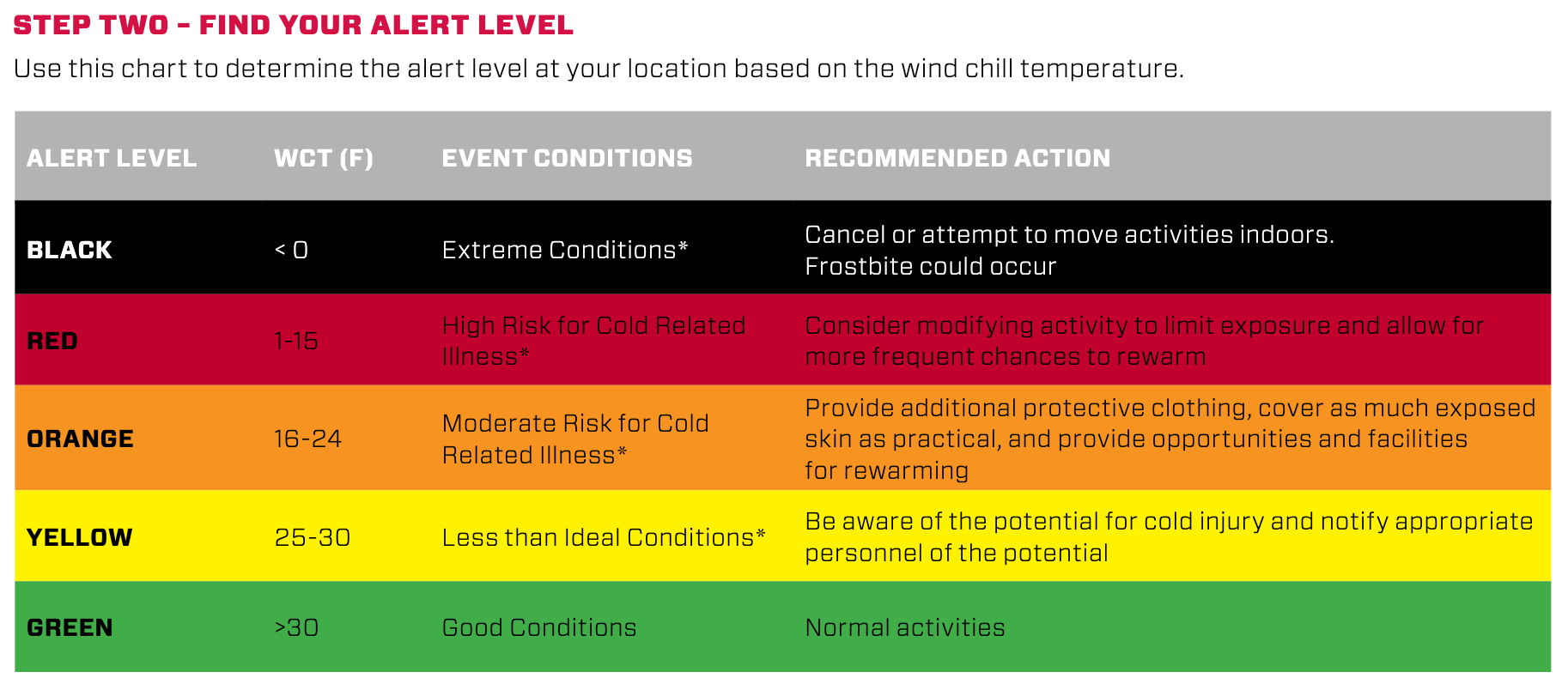
And last, as with all things, whether it's related to heat, cold, or anything else, no one is required to play in conditions that are uncomfortable for them. Our athletes health and safety is always our priority.